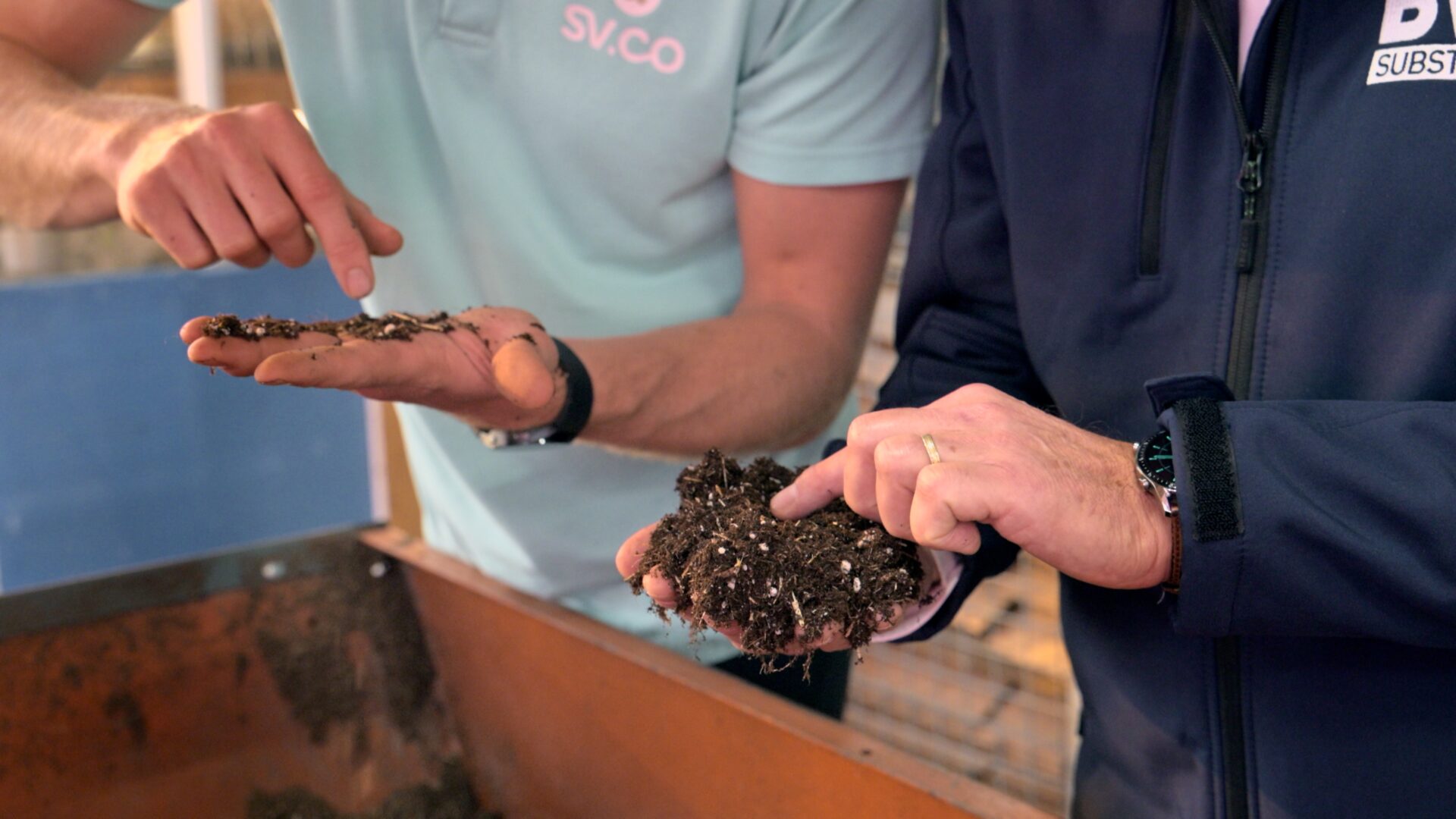
BVB Substrates uses reed canary grass in substrates to improve crop steering and performance
BVB Substrates incorporates reed canary grass into substrate mixtures for ornamental horticulture. This renewable raw material increases air content and drainage in the pot, enabling growers to manage irrigation and nutrition more precisely. Its use aligns with the growing demand for sustainable substrates and the industry covenant’s objective to achieve 50% renewable materials by 2030.
“How do you deliver the highest performance with the lowest possible impact? That is becoming increasingly important worldwide,” says John Noordam, Regional Sales Manager.
Practical experience: greater control over water and crop performance
For a customer in ornamental horticulture, BVB Substrates developed a substrate mixture containing reed canary grass, tailored to the cultivation of flowering plants such as kalanchoe. The mixture was developed in close collaboration with the grower, with adjustments based on plant responses and cultivation data.
According to cultivation specialist Thomas Botman (SV.CO), reed canary grass contributes to crop steerability in the greenhouse:
“You get more air and better drainage in the pot. Especially in winter, when light levels are low and evaporation is limited, it becomes much easier to fine‑tune irrigation and nutrition,” says Botman.
In addition, reed canary grass can slightly reduce capillary action, keeping the top layer of the pot drier. This helps limit mould and algae formation on the substrate surface, a well‑known challenge in certain crops. As with other fibre‑rich materials, a small additional nitrogen requirement may occur, but this can be easily compensated for through adjusted fertilisation in the mix.
The final substrate blend was developed and optimised step by step based on practical results, ensuring a good fit with greenhouse conditions and the grower’s steering requirements.