Growing strawberries in substrates: 6 advantages
In this article, we look at growing strawberries in substrates and the practical advantages this offers compared with soil cultivation. The use of substrates has become standard practice in parts of Europe and is increasingly adopted elsewhere due to the level of control it offers over crop performance.
Key takeaways
- Growing strawberries in substrates eliminates the need for crop rotation.
- Substrate systems can reduce water and fertiliser use.
- Higher planting densities often result in higher yields.
- Growers gain more control over irrigation and nutrition.
- Working conditions improve in tabletop and container systems.
Strawberry production systems
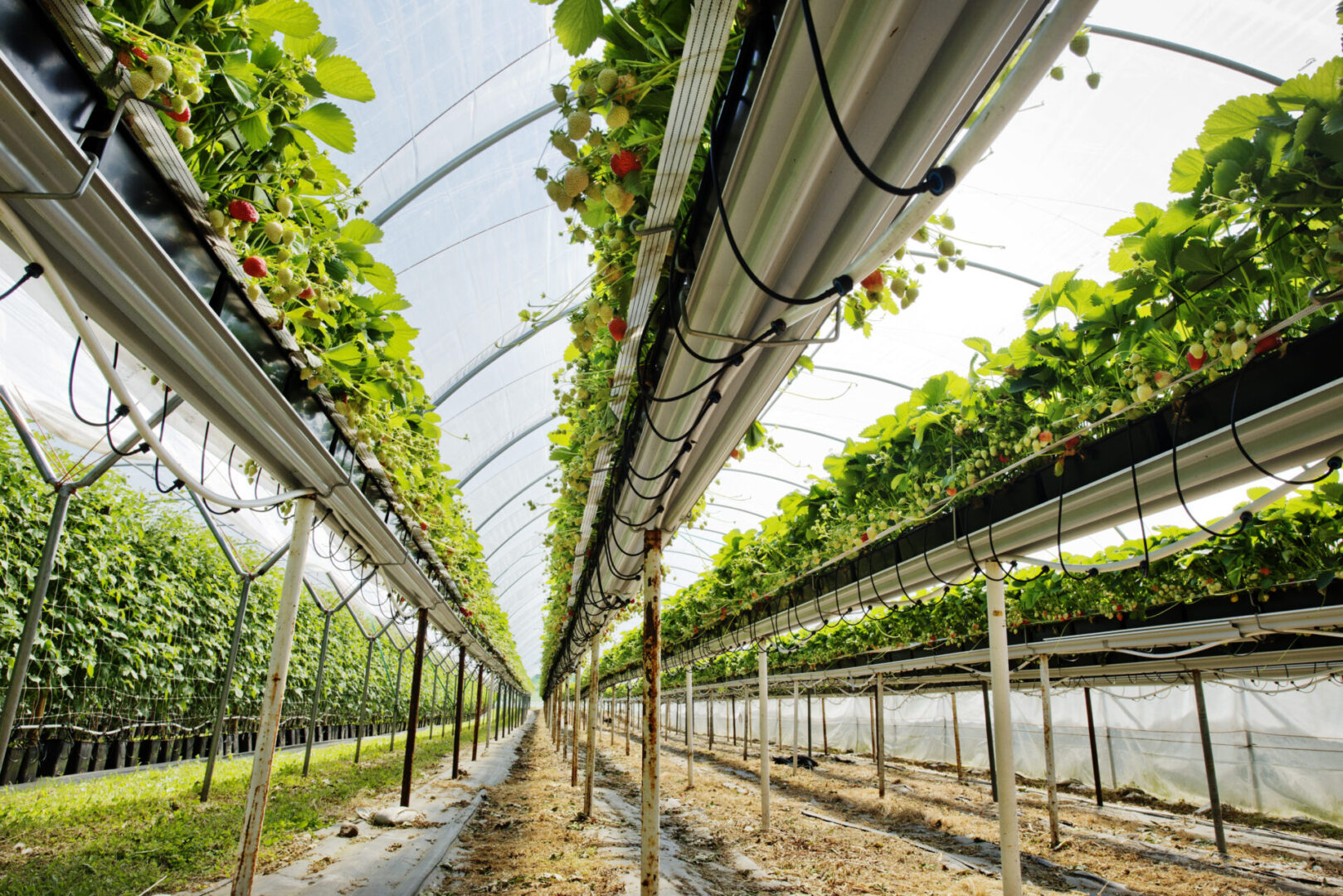
Over time, growers have developed a wide range of systems, including grow bags on raised beds, containers, wire systems and steel gutters.In this article, we share the benefits of switching from open field cultivation to growing strawberries in a high‑quality substrate.
6 Advantages of growing strawberries in substrates
1. No need for land rotation
When strawberries are grown in containers or grow bags filled with fresh substrate, the crop is no longer dependent on soil quality. This removes the need for crop rotation and allows growers to use the same location continuously, making it easier to invest in infrastructure and improve long‑term planning.
2. Reduced water and fertiliser use
3. Higher yields
Growing strawberries in substrates allows for higher planting densities compared with soil cultivation. This results in a larger assimilation surface and, in many cases, higher total yields.
4. Reduced use of crop protection products
Because substrate systems provide a cleaner and more controlled growing environment, the use of crop protection products can be reduced. In addition, higher yields per area mean that input use per kilogram of fruit is lower.
5. More control over the crop
Growing strawberries in substrates gives growers more control over root development, irrigation and nutrient supply.
6. Improved working conditions
Growing strawberries in containers and tabletop systems improves working conditions. Plants are positioned at a height that reduces physical strain during harvesting and crop maintenance. In addition, improved fruit visibility can increase picking speed and efficiency.
Considerations when switching to substrates
Although the advantages are clear, there are also practical considerations. Switching to substrate‑based production requires higher initial investment in infrastructure and systems. Growers also need to develop new knowledge and skills, including irrigation management, fertiliser strategies and monitoring parameters such as EC and pH. In substrate systems, water quality becomes a critical factor for successful cultivation.
Growing strawberries in substrates provides growers with greater control over water, nutrients and crop development. This can result in more consistent production, improved fruit quality and more efficient use of resources.
As production systems continue to evolve, substrates play an increasingly important role in professional strawberry cultivation.
Have a look at our related articles if you’d like to read more about this topic or contact our team if you’d like to get some personal advice.