Innovation in Growing Media: Behind the Research
Innovation starts with bold ideas. At BVB Substrates, research helps turn those ideas into practical insights for growers by evaluating growing media performance in laboratory analyses and commercial greenhouse trials.
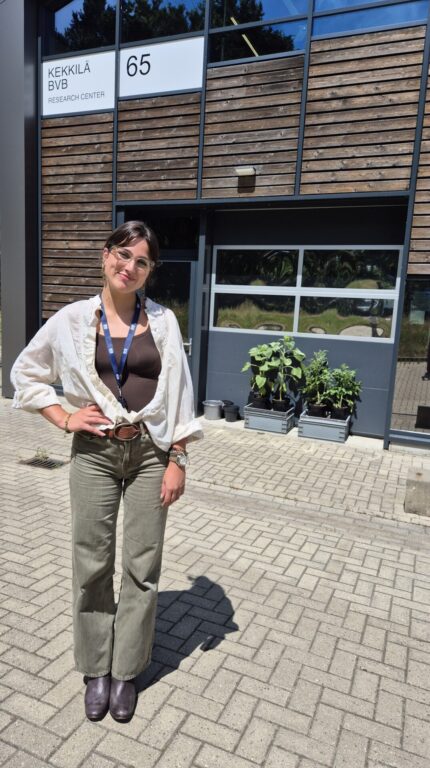
Interns play an active role in this work. Gea Sandini joined Kekkilä-BVB, where she contributed to projects involving innovative organic growing media products.
We asked her about her experience and what she learned during her internship.
 Can you tell us about your research project?
“I conducted a research project focused on evaluating sustainable growing media alternatives, including Accretio-based substrates, reed canary grass, innovative organic growing media products, and organic presspots. My work combined laboratory analyses with commercial greenhouse trials, assessing both plant performance and the physical, chemical, and environmental properties of innovative substrate formulations. The project gave me valuable insights into the potential of renewable growing media for professional horticulture.”
What did the internship teach you about the substrate industry?
“Beyond my research project, the internship gave me a comprehensive insight into the substrate industry. Although my internship was primarily based at Kekkilä-BVB, I had the opportunity to work closely with an external partner through a joint collaboration. That allowed me to experience how substrate innovations are evaluated and implemented in large-scale commercial horticulture. Throughout the internship, I met many professionals across the industry and learned from experts with decades of knowledge in substrate development and production.”
What was it like working in the lab?
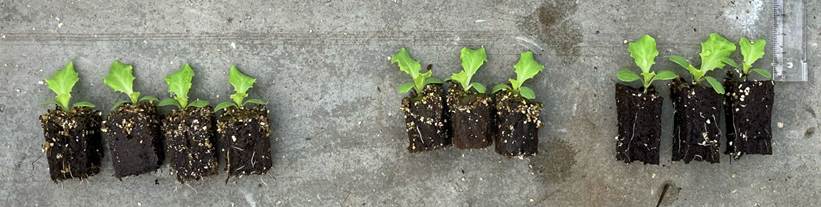
“In the laboratory at De Lier, together with the research team, I gained hands-on experience performing pF-curve measurements, WOK analyses, nutrient screenings, and other substrate characterisation techniques. I also worked with materials I had never encountered before, such as reed canary grass and innovative organic growing media products. I also took part in trials with Limore F1 strawberry seeds from Limgroup, which gave me valuable insight into the seed industry and showed how innovative breeding products can transform commercial horticulture.”
What did you take away from the internship?
Perhaps most importantly, the internship strengthened my understanding of sustainability. I learned that sustainability is not only about developing renewable materials, but also about objectively measuring their impact. Working with Life Cycle Assessments (LCAs) showed me how environmental impacts can be quantified and visualised, providing a scientific basis for developing and selecting more sustainable growing media. It reinforced the idea that sustainability begins long before a crop reaches the consumer, even the substrate in which a plant grows plays a measurable role in its environmental footprint, making innovation in growing media an important step toward a more sustainable horticultural sector.