Reed canary grass: performance as a starting point, fit for purpose as the result
At BVB Substrates, one principle takes centre stage: fit‑for‑purpose performance. But how do you develop a substrate that truly delivers in practice while aligning with the use of circular raw materials?
In this video, Area Sales Manager Eddie van de Vijver takes you through that process, from the initial choices in the blend to a high‑quality substrate.
At SV.CO, a substrate blend was developed for flowering potted plants.
In the initial trial set-up, approximately 20% reed canary grass was used. This showed that the substrate dried out more quickly and that the nutrient management needed to be adjusted. By adding perlite and optimising the fertilisation, the blend was further balanced.The result is a stable and well-controlled substrate tailored to the specific conditions at SV.CO.
In the initial trial set-up, approximately 20% reed canary grass was used. This showed that the substrate dried out more quickly and that the nutrient management needed to be adjusted. By adding perlite and optimising the fertilisation, the blend was further balanced.The result is a stable and well-controlled substrate tailored to the specific conditions at SV.CO.
Properties of reed canary grass
- Higher air capacity, resulting in improved root development and a more even distribution within the pot
- High drainage capacity, allowing for more precise control of irrigation and fertilisation
At the same time, this requires targeted crop management:
- Lower water buffering capacity in the substrate
- Higher fertiliser demand, particularly nitrogen
Customer experience
Curious how SV.CO experiences this in practice? ▶ Watch the grower story
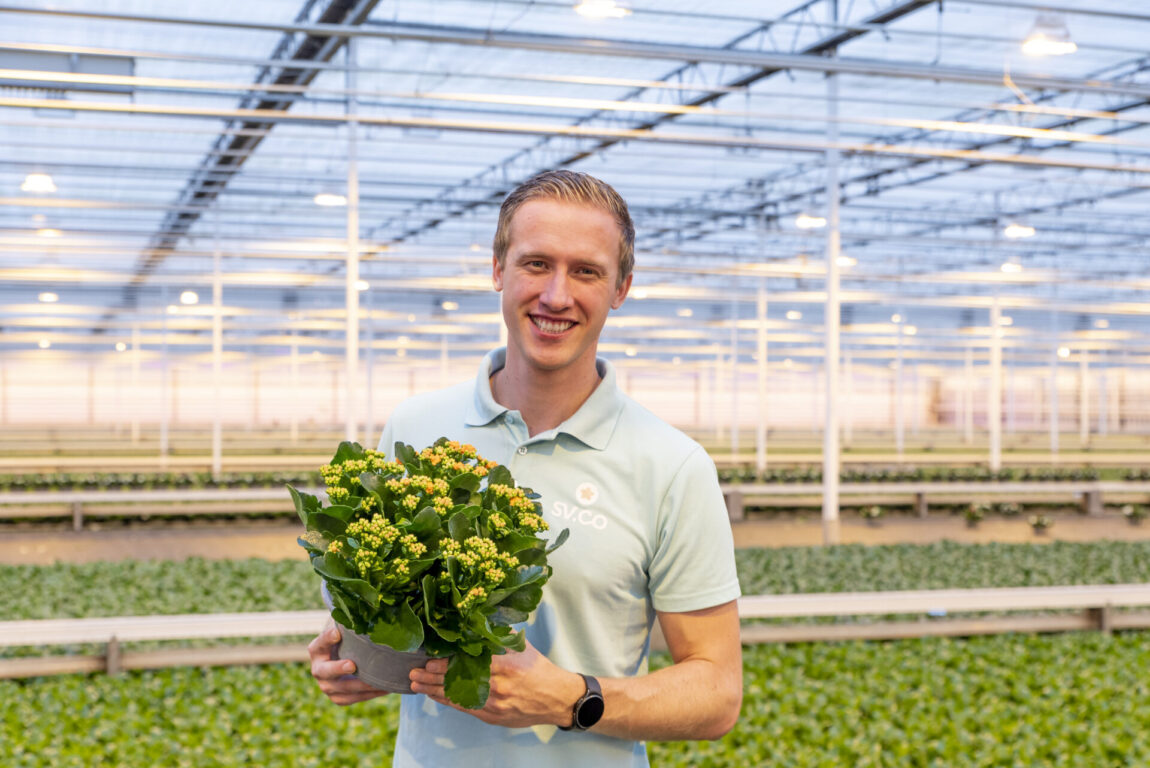 “You get more air and better drainage in the pot. Especially in winter, when there is limited light and low evaporation, this is a major advantage. It allows you to adjust irrigation and nutrition more easily,” says Thomas Botman, crop specialist.
Focused on the cultivation of tomorrow
Reed canary grass is part of a broader portfolio of renewable raw materials within BVB Substrates. Through continuous testing and close collaboration with growers, substrates are further developed to meet changing demands in the sector.
Would you like to know what this could mean for your cultivation? Our specialists provide practical advice on a substrate solution tailored to your crop.